

Advanced Command and Staff Course (ACSC) 29 course members have returned to the Defence Academy this month, ready to build on their studies.
During the first term course members and directing staff were immersed in the ‘Understand’ phase of the course. This explored the context of international defence and the foundation for strategic thinking in an era of global competition, focusing on:
- strategic context: examining the global security environment, major power competition, and the evolving character of conflict
- international relationships: understanding alliances, institutions, and regional security architectures
- theory into practice: applying conceptual frameworks to real-world scenarios through syndicate work and directed study
This intellectual foundation ended with the first of the course’s two Regional Security Exercises (RSE), offering practical extensions to classroom and syndicate learning.
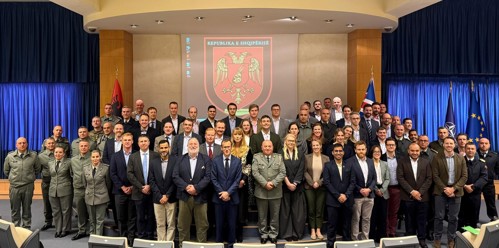
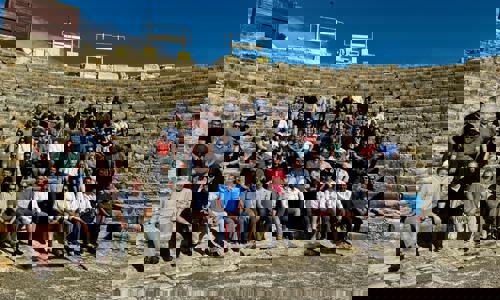
Split into five groups, course members visited:
- Sweden
- Estonia and Latvia (combined)
- Germany
- Republic of Albania (a first for ACSC)
- Cyprus
Each visit lasted four to five working days, and offered privileged access to:
- ministerial briefings
- military facilities
- academic and industrial sites
Lieutenant Colonel John Russell, ACSC Deputy Chief of Staff, noted:
“All visits benefited from the in-country and regional perspectives of UK embassies and consulates, with special thanks going to the UK’s ambassadors and defence attachés. Host nation support was excellent, and Albania’s inclusion marks a significant first for the course.”
Beyond professional engagements, participants also explored cultural and historical landmarks including the Stasi Museum in Berlin, the Vasa Museum in Stockholm and ancient sites in Cyprus—reinforcing the importance of cultural awareness in international defence.
Term Two now focuses on:
- operational art: how military capability is generated, integrated, and employed
- joint and combined operations: examining interoperability and force projection
- capability development: understanding the link between strategic intent and operational execution
This term will deepen the course’s emphasis on the practical application of command and prepare course members to operate effectively in complex, multinational environments.
ACSC develops military personnel and their Civil Service counterparts for command roles, focusing on contemporary strategic and military issues, emerging trends, and risks. In partnership with King’s College London, it prepares leaders for the demands of operations in the Information Age.